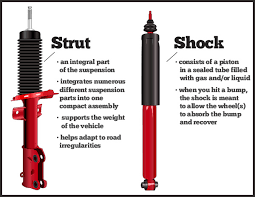
The suspension system in a car is responsible for absorbing bumps and keeping the tires in contact with the road. It is made up of a variety of components, including springs, shocks, and struts. Shocks and struts are important for a number of reasons. They help to:
- Springs are the primary component of the suspension system. They provide the initial resistance to bumps and keep the car from bouncing too much.
- Shocks (also known as dampers) are responsible for controlling the rebound of the springs. They prevent the car from bouncing up and down excessively after hitting a bump.
- Struts are a type of shock absorber that is integrated with the spring. They are more common on modern cars than traditional shock absorbers.
The Importance of Shocks and Struts
- Provide a comfortable ride: By absorbing bumps and keeping the tires in contact with the road, shocks and struts help to reduce vibration and make the ride more comfortable for passengers.
- Improve handling: By controlling the rebound of the springs, shocks and struts help to keep the car stable and prevent it from swaying or rolling.
- Increase safety: By keeping the tires in contact with the road, shocks and struts help to improve the car’s braking and cornering performance.
How Shocks and Struts Work
Shocks and struts work by using hydraulic fluid to dampen the movement of the springs. When the car hits a bump, the springs compress. The shocks and struts then absorb the energy from the compression and prevent the springs from rebounding too quickly. This helps to keep the car stable and prevents it from bouncing up and down excessively.
The amount of damping provided by the shocks and struts is determined by the viscosity of the hydraulic fluid. The more viscous the fluid, the more damping it will provide.
Signs of Worn Shocks and Struts
There are a few signs that your shocks or struts may be worn. These include:
- A bouncy or uncomfortable ride
- Excessive body roll when cornering
- Poor handling
- Shuddering or vibration when braking
- Noise from the suspension when driving over bumps
If you notice any of these signs, it is important to have your shocks and struts checked by a qualified mechanic. Worn shocks and struts can affect the handling and safety of your car, so it is important to replace them as soon as possible.
When to Replace Shocks and Struts
The average lifespan of shocks and struts is about 50,000 to 100,000 miles. However, the actual lifespan can vary depending on a number of factors, such as driving conditions, the weight of the car, and the quality of the shocks and struts.
If you live in an area with rough roads or if you frequently drive on uneven surfaces, you may need to replace your shocks and struts sooner. It is also a good idea to have your shocks and struts checked every 20,000 to 30,000 miles to make sure they are still in good condition.
Replacing Shocks and Struts
Replacing shocks and struts is a relatively simple job that can be done by most DIY mechanics. However, it is important to follow the instructions carefully to avoid damaging the car.
The first step is to jack up the car and support it with jack stands. Then, remove the old shocks or struts. The new shocks or struts can then be installed in the reverse order.
After the new shocks or struts are installed, it is important to test drive the car to make sure they are working properly.
Conclusion
Shocks and struts are an important part of the suspension system in a car. They help to provide a comfortable ride, improve handling, and increase safety. If you notice any of the signs of worn shocks or struts, it is important to have them checked by a qualified mechanic.
